“We ran an influencer campaign last quarter. It got 2 million impressions. Was it successful?”
If you can’t answer that question with confidence — if your answer sounds like “we think so?” or “the feedback was positive” — you’re not measuring influencer marketing ROI correctly.
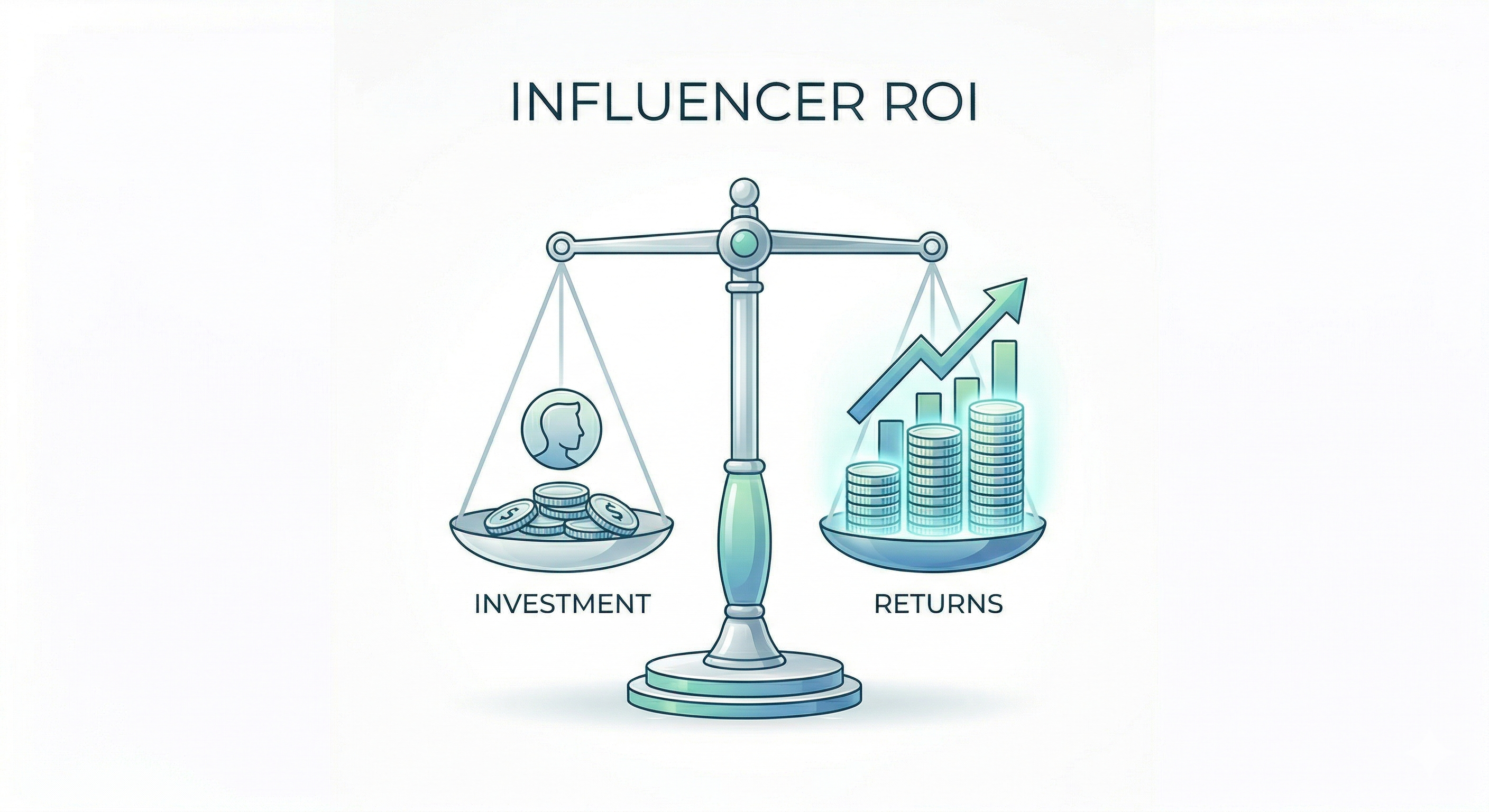
ROI measurement is the single biggest gap between brands running average influencer programs and brands scaling high-performance creator channels. In India’s rapidly maturing influencer marketing landscape, where brands are collectively spending hundreds of crores on creator partnerships, measurement discipline is no longer optional — it’s the difference between a channel that compounds and one that gets cut.
Here’s the exact framework.
Step 1: Define Success Before the Campaign Goes Live
ROI can only be measured against a defined, pre-stated goal. Before any creator publishes content, document in writing:
- Primary objective: Awareness / Consideration / Conversion
- KPI for that objective: CPM / Engagement Rate / CPA / ROAS
- Target number: Not “more sales” — a specific benchmark
If your goal is awareness, your ROI metric is cost per 1,000 impressions (CPM). If your goal is conversion, your ROI metric is cost per acquisition (CPA) or ROAS. Conflating these is what leads to post-campaign confusion where everyone has a different definition of success.
Step 2: Build Your Tracking Infrastructure (Non-Negotiable)
Without proper tracking, you’re guessing. Before any campaign goes live, set up:
For conversion campaigns:
- Unique UTM-tagged links for every creator
- Unique discount codes per creator for Shopify/WooCommerce attribution
- Platform integrations that log conversions automatically against creator IDs
For awareness campaigns:
- Capture reach and impressions at the post level on Day 1, Day 7, and Day 30
- Track share rate — viral shares extend reach organically and improve your effective CPM
For YouTube integrations:
- Pull view counts at 30 and 90 days post-publication — long-tail views are systematically underreported
Step 3: The 6 Core Influencer Marketing Metrics to Track
1. Reach & Impressions Reach is unique accounts. Impressions are total displays. For awareness campaigns, both matter. For conversion campaigns, reach is more relevant.
2. Engagement Rate (Likes + Comments + Saves + Shares) ÷ Reach × 100. Save rate is particularly undervalued — a high save rate signals strong purchase intent.
3. Click-Through Rate (CTR) Clicks ÷ Impressions × 100. Critical for traffic and conversion objectives. For Instagram Stories, typical CTR benchmarks in India range from 0.5% to 2.5%.
4. Cost Per Engagement (CPE) Campaign cost ÷ Total engagements. Normalizes cost comparison across creators of different sizes.
5. Earned Media Value (EMV) The estimated equivalent cost of generating the same reach through paid advertising. Useful for showing leadership the full value of influencer content beyond direct attribution.
6. Return on Ad Spend (ROAS) Revenue attributed to campaign ÷ Campaign cost. The gold standard for conversion campaigns. Industry benchmark for influencer marketing ROAS in India ranges from 2x to 8x depending on category and creator tier.
Step 4: Measure at the Creator Level — Not Just Campaign Level
Aggregating all results into a single campaign dashboard masks what actually works. Always break performance down by individual creator:
- Which creators drove the highest engaged audiences?
- Which creators converted at the lowest CPA?
- Which creators’ content performed best when repurposed as paid ads?
- Which content formats drove the most saves?
This per-creator analysis transforms your campaigns into compounding institutional knowledge. Over time, you identify which creator types consistently generate ROI for your specific product — and stop wasting budget on experiments that don’t.
Step 5: Capture the Long Tail (Most Brands Miss This)
Influencer content doesn’t expire in 24 hours. A YouTube review can drive views and conversions 12 months after posting. An Instagram Reel can resurface in Explore for weeks. Most brands only measure campaign impact in the first 7 days, which systematically understates influencer marketing ROI by 20–40%.
Track performance milestones at Day 7, Day 30, and Day 90 after publication. Report cumulative numbers, not just the initial burst.
Step 6: Build a Monthly Influencer ROI Dashboard
Running individual campaigns without aggregated reporting prevents strategic learning. Review monthly:
- Total influencer marketing spend
- Total attributed conversions and revenue
- Blended CPA across all creators
- Top 5 creators by CPA and engagement rate
- Content pieces generated, approved, published, and repurposed
- Running ROAS trend — are campaigns improving quarter-over-quarter?
This dashboard is what you bring to leadership budget reviews. ROAS and CPA data — not impressions screenshots — is what secures and grows your influencer marketing budget.
The Reporting Trap: Vanity Metrics Kill Budgets
Impressions, total likes, and follower counts feel satisfying in a report slide. They mean nothing if they don’t connect to business outcomes. The brands that lose influencer marketing budget in annual reviews are almost always the ones reporting on reach without attribution data.
Report on ROAS, CPA, and attributed revenue. Everything else is context, not proof.