It’s one of the most common decisions in influencer marketing: go big with a macro influencer who reaches millions in one post, or distribute budget across dozens of micro influencers with smaller but more engaged, more targeted audiences?
The honest answer isn’t “it depends” in a vague, non-committal way. There are clear situations where each approach wins — and a proven hybrid model that most serious brands eventually converge on. Here’s the full breakdown.
The Case for Micro Influencers in India
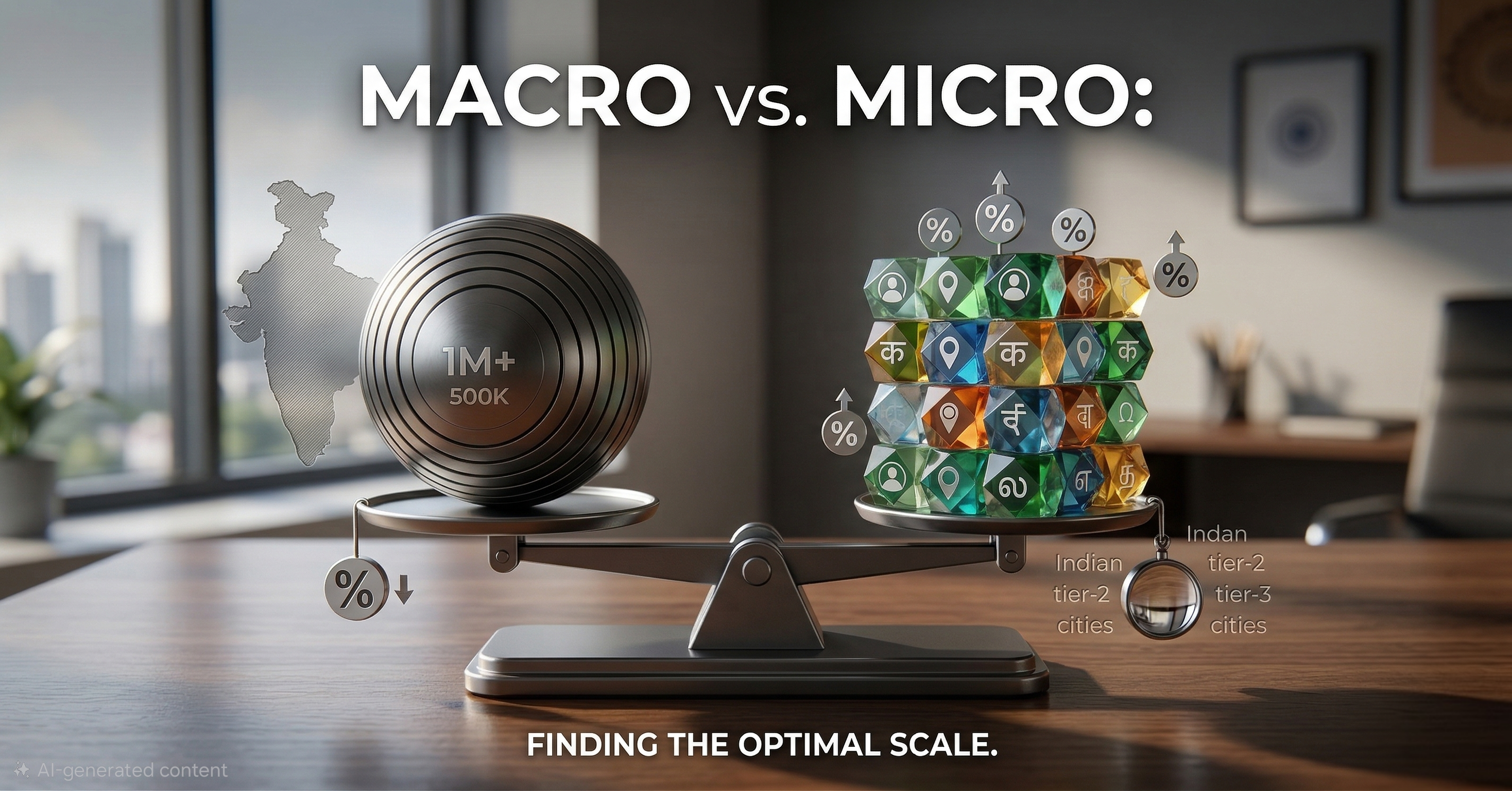
Micro influencers (10K–100K followers) consistently outperform larger creators on engagement rate in the Indian market. Their audiences follow them for a specific reason — fitness, cooking, parenting, regional fashion, tech reviews — which means an endorsement in that niche carries genuine recommendation weight.
Why micro wins for D2C brands:
- Higher audience trust. Their followers feel like they personally know the creator. A recommendation reads like a friend’s, not an ad.
- Superior targeting. A micro-creator in the running niche has 80%+ of their audience interested in running. A Bollywood celebrity has 80% of their audience interested in the celebrity.
- Content diversification. Running 15 micro-creators gives you 15 pieces of authentic content, 15 audience samples, and 15 data points about which messaging resonates.
- Performance pricing. Many micro influencers in India are open to affiliate or hybrid arrangements — you pay for measurable results, not just reach.
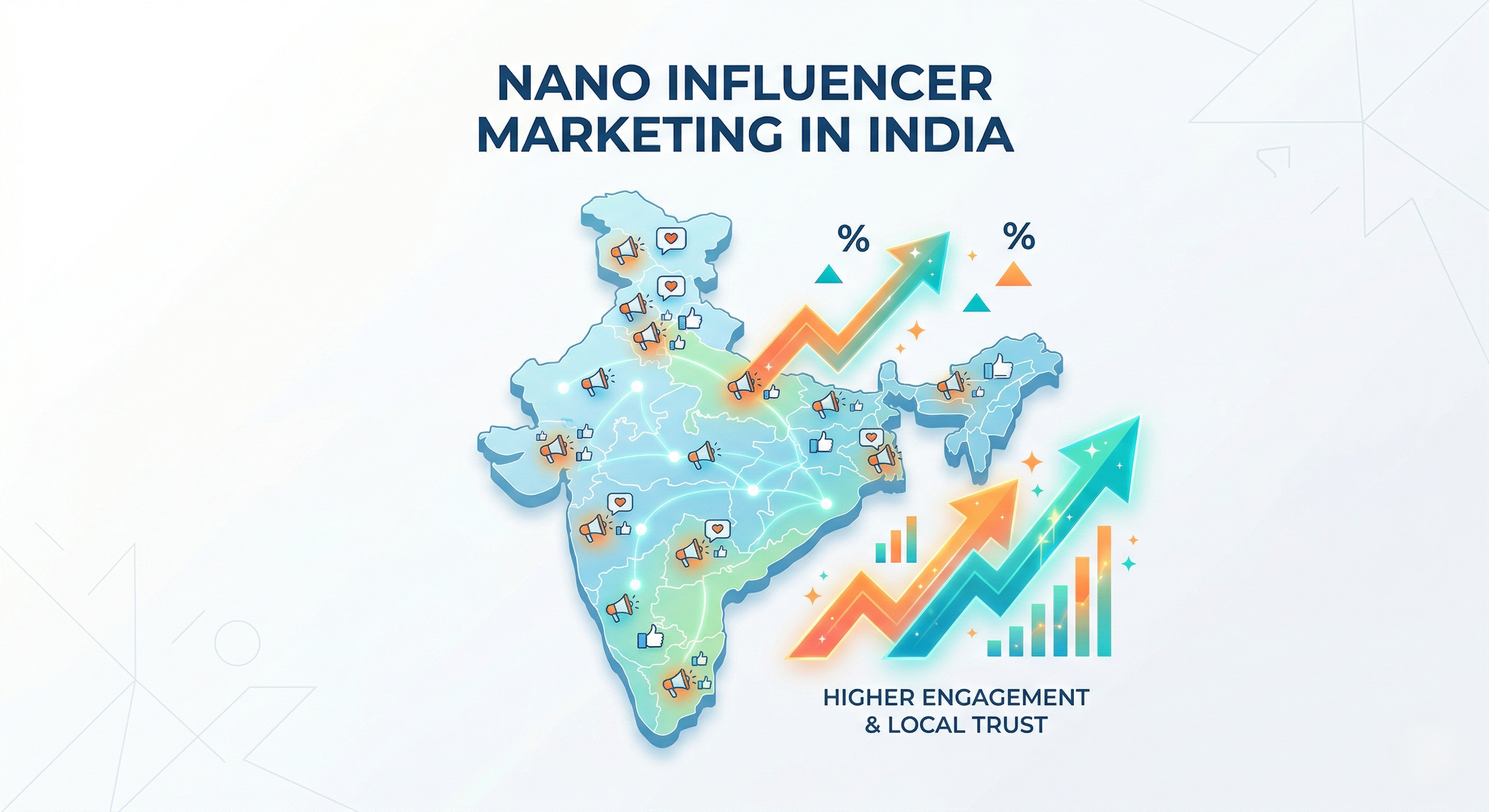
- Regional reach. Nano and micro creators in tier-2 cities like Ludhiana, Surat, or Nagpur often build fiercely loyal local communities that no national macro creator can access.
Best for: Product launches, performance-driven campaigns, niche product categories, regional market entry, new brands with defined budgets.
The Case for Macro Influencers
When brand awareness at national scale is the objective, macro (100K–1M followers) and mega (1M+) influencers deliver something micro creators simply cannot: the ability to reach millions of people in a compressed timeframe.
Why macro works:
- Scale and speed. One post can reach 500K–2M people overnight. Building equivalent reach through micro-creators is slower.
- Brand credibility signals. Larger creator associations lend immediate social proof that a brand is worth paying attention to.
- Festive season and cultural moments. During Diwali, IPL season, or a major product launch, macro reach puts your brand inside the conversation at the exact moment cultural attention is highest.
Best for: National brand launches, awareness campaigns, IPL/festive amplification, category credibility plays.
Use Case vs. Creator Tier: Quick Reference
| Goal | Recommended Tier |
|---|---|
| Maximize national reach fast | Macro / Mega |
| Drive direct conversions | Micro / Nano |
| Generate authentic UGC content | Micro |
| Build regional market presence | Nano / Regional Micro |
| Test messaging across audiences | Micro (multiple creators) |
| Establish brand credibility | Macro + Micro mix |
| Run affiliate / performance program | Micro / Nano |
| Festive season visibility | Macro + Mid-Tier |
The Winning Model: The Pyramid Strategy
The most effective influencer programs in India don’t choose between macro and micro — they use both in a structured hierarchy that balances reach with trust.
The Pyramid:
- Top (Awareness Layer): 1–2 macro creators to establish national brand presence
- Middle (Consideration Layer): 5–10 mid-tier creators (50K–300K) to drive reach within your target niche
- Base (Conversion Layer): 15–30 micro/nano creators to generate authentic content, community buzz, and direct conversions
This structure diversifies risk, generates content variety, and creates compounding data to optimize future campaigns.
Budget Allocation Framework (₹10 Lakh Campaign)
| Layer | Budget % | Creator Type | Goal |
|---|---|---|---|
| Awareness | 30% (₹3L) | 1–2 macro creators | Brand reach |
| Consideration | 40% (₹4L) | 5–8 mid-tier creators | Niche credibility |
| Conversion | 30% (₹3L) | 15–20 micro/nano creators | Sales and UGC |
Adjust weighting based on your category. Luxury brands weight the top heavier. Subscription apps go all-in on performance micro-creators at the base.
The Metric That Settles the Debate
When teams debate macro vs. micro, always redirect to one number: Cost Per Acquisition per creator tier, tracked consistently across 2–3 campaigns. That data — built through real campaigns with real attribution — will tell you exactly where to weight future budget. The debate stops being theoretical and becomes purely mathematical.